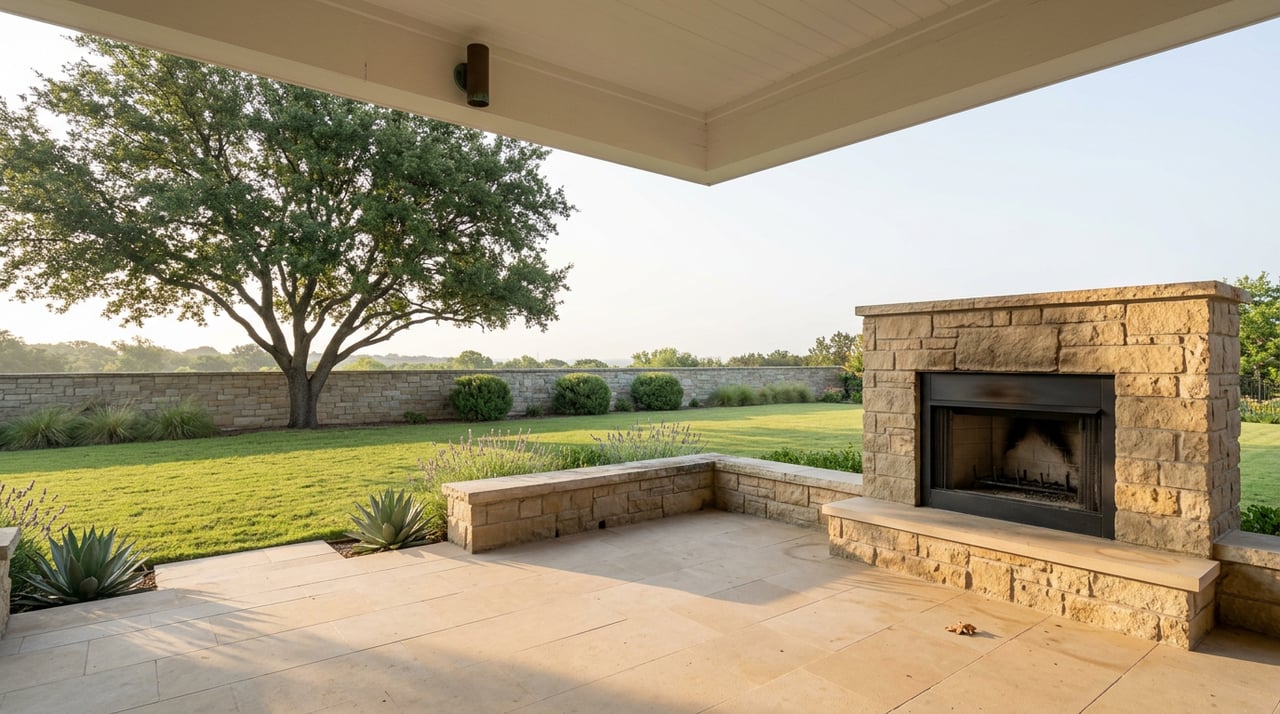
Why Aviara and La Costa Rarely List: The Tax Math Behind Carlsbad's Quietest Neighborhoods
September 3, 2026
September 3, 2026
Drive through Aviara on a weekday afternoon and count the for-sale signs. Three in a given month is a busy stretch. The neighborhood wraps around a golf course designed by Arnold Palmer, backs up to Batiquitos Lagoon, and sits inside one of the tightest housing markets in San Diego County, yet a surprisingly small share of its owners choose to sell in any given year. La Costa, a few miles east, tells the same story around its older tree-lined streets near the Omni La Costa Resort.
The easy explanation is that people who buy in these neighborhoods simply don't want to leave. That's part of it. But a bigger, less obvious force has been holding inventory in place for years, and it has nothing to do with how much anyone loves their kitchen. It's a property tax rule, and one piece of it changed in a way most buyers comparing Carlsbad to other coastal towns have never had explained to them.
California taxes a home based on its purchase price, not its current value, and that assessed value can only climb about 2 percent a year under Proposition 13. An owner who bought in Aviara or La Costa in the 1990s or early 2000s, when the master-planned sections of both neighborhoods were still being built out, is very likely paying property tax on an assessed value that has almost nothing to do with what the home would sell for today.
The San Diego County Assessor's own published example shows how the gap works once you decide to move. Say your original home has an assessed value of $500,000 but a market value of $700,000. If you buy a replacement home worth $900,000, the $200,000 difference gets added to your old assessed value, giving you a new base of $700,000 instead of a full reassessment to $900,000. That's the mechanism working in your favor. For most of the last few decades, though, according to the California Board of Equalization, the benefit only worked if you bought a home of equal or lesser value and used it exactly once in your lifetime. Break any of those rules and you paid full market-rate tax on the new place, permanently.
That combination is what real estate people sometimes call the golden handcuffs. A homeowner sitting on a decades-old assessed value effectively pays a penalty for moving, even to downsize, even within the same city. It's a big reason long-held Carlsbad addresses tend to stay in the same hands until a life event forces the issue.
Proposition 19 rewrote the rules for homeowners 55 and older, and the changes are more generous than most people assume. The rules changed in several ways.
First, the move no longer has to stay inside one county. Before 2021, intercounty transfers only worked if both counties had opted into a reciprocal agreement, and just ten counties statewide had done so, including San Diego but not San Francisco, according to California Prop 19 and AppealDesk. A retiree selling in San Francisco and buying in Carlsbad could not carry their tax base under the old rules. Today, all 58 California counties are eligible, so that same move works.
Second, the replacement home no longer has to cost the same or less. Under Prop 19, you can buy up, and the tax hit only applies to the difference between the two home values, not the whole new purchase price.
Third, the lifetime-use rules changed.
| Prop 60 / 90 (before April 2021) | Prop 19 (April 2021 onward) | |
|---|---|---|
| Geographic reach | Same county, or one of 10 reciprocal counties | All 58 California counties |
| Replacement home value | Equal or lesser value only | Any value, with a blended basis for the difference |
| Lifetime uses | One | Changed |
| Age requirement | One spouse 55 or older | One spouse 55 or older |
Here's the part that matters if you're watching Aviara or La Costa listings and wondering why nothing moves. A large share of the owners in these neighborhoods bought before Prop 19 existed, and many of them bought before San Diego even had reciprocal agreements with most other counties. For that group, moving anywhere outside the ten eligible counties, or moving up in price at all, used to mean giving up their tax protection entirely. Staying put was often the financially rational choice even when the house no longer fit their life.
By at least one local account, Aviara held its property values through the 2008 financial crisis when much of the rest of the county did not, which tells you something about who buys there: people who plan to stay a long time. That pattern was reinforced, not just by love of the neighborhood, but by a tax code that made leaving expensive.
Prop 19 loosens that lock, but only for a specific group.
If you're on the buying side and not yet 55, understand who you might be bidding against. A seller using a Prop 19 transfer can often afford to be patient and can move quickly once they find the right replacement, because their new carrying costs are a fraction of what the sale price suggests. That changes negotiating dynamics in ways a median price chart won't show you.
Speaking of that median: Redfin recorded a median sale price of $1.6 million in Carlsbad for the three months ending June 2026, while Movoto's listing data put the asking-price median at $1.09 million in August 2026. The gap isn't a contradiction, it reflects the difference between closed sales and current asking prices, and Carlsbad's genuinely wide range of housing stock. Break it down by product type as of mid-2026 and the picture gets clearer: condos and townhomes offer an entry point around $700,000 to $805,000, newer master-planned single-family homes in Bressi Ranch and similar inland communities regularly cross $1.9 million, and ocean-view properties in coastal Carlsbad Village push past $2.5 million. Aviara sits in that same upper tier. A single citywide median tells you almost nothing about what your money buys in any specific one of these pockets.
Earlier this year there was a real political threat to part of Prop 19, and it's worth being precise about what it targeted, because it wasn't the part this article is about. A campaign called Fix Prop 19 to Save Our Children's Future needed to submit roughly 874,641 valid signatures by early May 2026 to land a repeal measure on the November 2026 ballot. According to the California Secretary of State's own tracking, the effort fell short and was recorded as failed in May 2026, the third such attempt to miss the threshold after similar campaigns in 2022 and 2024.
Does the tax base transfer if I'm moving from outside California? No. The transfer only applies to moves between California counties.
What if I buy my next home before I sell my current one? Until the original home sells and the claim is filed, you'll pay full assessed tax on the new purchase. The transfer takes effect once both transactions are complete.
If you're weighing a move into or within Carlsbad and want to know what the tax math actually looks like for your specific situation, that's exactly the kind of detail our Senior Transition Program is built to sort out before you list anything. Chintz Team can walk you through the numbers alongside the county paperwork, so the decision comes down to whether the home is right for you, not whether the tax bill makes sense. Request a free home valuation and senior transition consultation whenever you're ready to look at your own numbers.
This article is general information, not legal, tax or financial advice. Consult a qualified professional about your situation.
Stay up to date on the latest real estate trends.

AS A SENIOR REAL ESTATE SPECIALIST (SRES) WE ARE COMMITTED TO MEETING THE REAL ESTATE NEEDS OF SENIORS AND THEIR FAMILY MEMBERS. WE HAVE THE TRAINING AND CREDENTIALS NECESSARY TO COUNSEL 50+ CLIENTS AND THEIR FAMILIES THROUGH MAJOR FINANCIAL AND LIFESTYLE TRANSITIONS INVOLVED IN RELOCATING, REFINANCING OR SELLING THEIR FAMILY HOME.