In Cardiff, Walkable Cottages Can Cost More Per Square Foot Than Ocean-View Homes
October 1, 2026
October 1, 2026
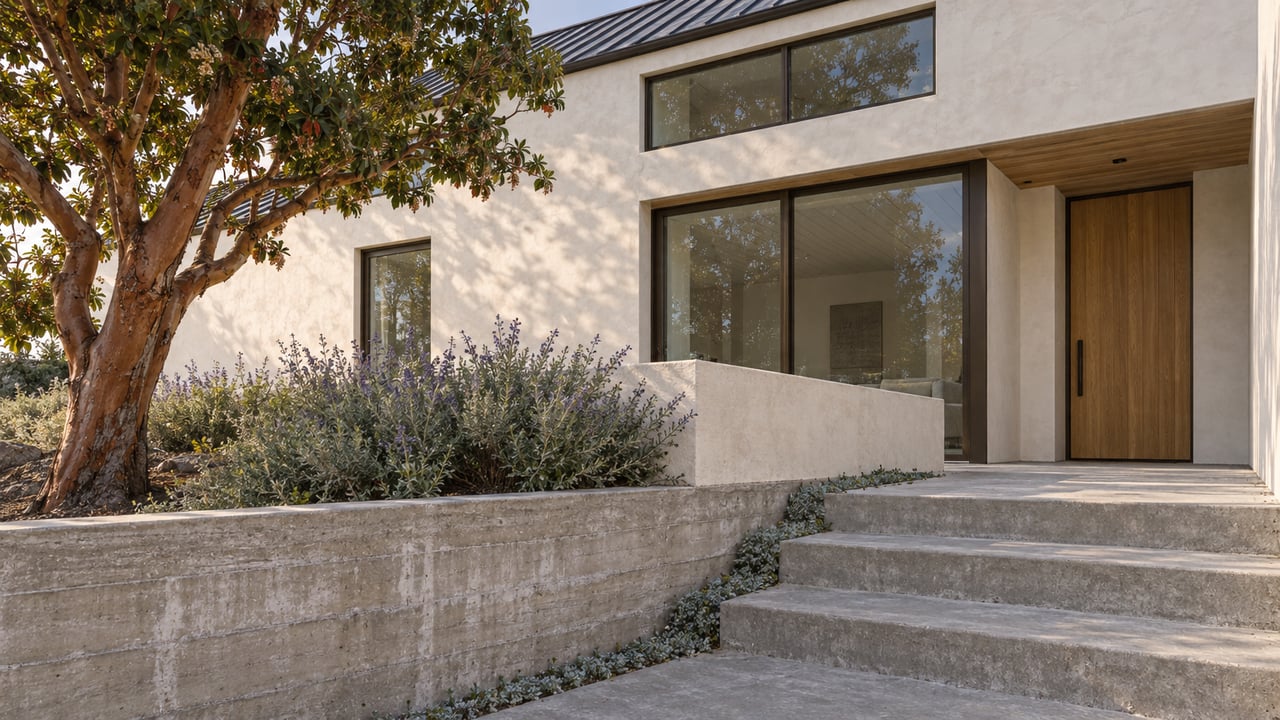
A three-bedroom cottage six blocks from the beach in Cardiff-by-the-Sea can cost more per square foot than a five-bedroom estate on the hill above it with a wide-open view of the Pacific. That isn't a rounding error in someone's spreadsheet. It's how the town is built.
Ask two different sources for Cardiff's current price and you'll get two answers that don't obviously reconcile. One MLS feed tracking active listings in Cardiff-by-the-Sea put the average price around $1.51 million across 38 listings as of late September 2026. A separate local market guide published in August 2026 cited recent Cardiff sale prices running from roughly $2.23 million to $2.6 million, well above the broader Encinitas median of about $2.18 million for the same period.
Those aren't competing claims about the same market. They're describing two different markets that happen to share a zip code.
Cardiff-by-the-Sea has been part of the City of Encinitas since the five communities, Olde Encinitas, New Encinitas, Olivenhain, Leucadia, and Cardiff itself, incorporated in 1986. It kept its own zip code, 92007, and its own internal geography did the rest of the work. Head inland from South Coast Highway and the ground rises fast. That single fact, more than any marketing label, splits the town into two real estate markets.
South and east of Birmingham Drive sits the flat, compact grid locals call the Walking District, built around San Elijo Avenue with easy blocks to Seaside Market and the beach. North of Birmingham, the land climbs into what everyone calls the Composer District, laid out on streets named for Mozart, Bach, Verdi, Chopin, Rossini, Liszt and Rubinstein, a naming pattern that traces back to developer Victor Kremer. A third pocket, Poinsettia Heights, sits east of Interstate 5 with its own separate housing stock.
These are recognized sub-areas with real unit counts, not just neighborhood nicknames: local planning breakdowns show roughly 932 detached and attached units in the Walking District, about 608 detached units across the Composer District's upper and lower sections, and 482 detached units in Poinsettia Heights. Three distinct inventories, one shared MLS search box.
Recent local listings illustrate the split in dollar terms. Attached homes and smaller cottages in the Walking District have generally started in the high-$1 million to $2 million range over the past year, while single-family Composer District homes with genuine ocean views have started around $3 million and run past $8 million depending on lot size and how much of the Pacific a specific parcel is allowed to keep. Neither number describes Cardiff. Each describes one of the two Cardiffs.
In the Walking District, homes trend small. Original 1950s and 1960s cottages sit on modest lots, some far under a thousand square feet before renovation, and newer builds squeeze onto parcels with alley access rather than sprawling yards. What they trade in size, they make up in errand distance. Seaside Market, the Cardiff Kook statue at the corner of South Coast Highway and Chesterfield Drive, the beach itself, and the Coastal Rail Trail crossing that links Cardiff to Encinitas all sit within a short walk, and the price per square foot on the smallest, best-located parcels here has been reported running past $1,000.
That premium comes from walkability, not the view, and it behaves differently in the market than a view premium does. A cottage two blocks from Seaside Market doesn't get more valuable if someone builds a bigger cottage next door. It gets more valuable because there is only so much land within walking distance of the market, the beach access points, and that one rail trail crossing, and none of that land is being made.
Up the hill, the Composer District plays by a different set of rules. Lots run larger there, six thousand to fifteen thousand square feet is typical across town, and many Composer District homes are built with the floor plan flipped, kitchen and living space on the upper level, bedrooms below, a design chosen specifically to lift the most-used rooms above the roofline of the house downhill and catch the ocean view over it. The streets themselves step up the hillside, so each row of houses sits slightly higher than the one in front, which is part of why so many properties here get any ocean view at all.
That design choice exists because of a constraint, not a preference. Cardiff sits inside the California coastal zone, and exterior changes here run through Coastal Commission review, with height limits enforced to protect the sightlines of the homes behind and above a given lot. The City of Encinitas's own hazard planning materials describe ongoing negotiations with the Coastal Commission over a comprehensive policy for bluff-top and hillside development, a sign of how much regulatory attention this stretch of coastline already draws. You cannot simply add a story to capture more view. Vacant land in the Composer District is effectively gone, so most of what comes to market is an older home that needs to be gutted or rebuilt within the same height envelope, and construction budgets here have to account for coastal permitting timelines the way a Walking District remodel usually doesn't.
The practical effect is that a clear view corridor is a much scarcer thing than a house on the hill. Two lots on the same Composer District street can sell for very different prices even though both listings use the words ocean view.
If you're comparing a Walking District listing against a Composer District one using price per square foot alone, you're comparing two different products that happen to share a market report. The Walking District number reflects proximity, the ability to leave the car in the garage and walk to coffee, the market, and the sand. The Composer District number reflects a mix of lot size, view quality, and the view a specific parcel offers as neighboring properties get renovated around it.
This matters most when the comparison isn't hypothetical. Anyone evaluating an inherited Cardiff property, whether it's a Walking District cottage that hasn't been touched since the 1960s or a Composer District house on one of the composer-named streets, needs comps drawn from the same sub-area and, ideally, from lots with a similar relationship to the height limit, not a townwide average pulled from whichever handful of listings happen to be active that month. The same goes for anyone relocating from out of state and trying to figure out what a given budget actually buys. Two million dollars in the Walking District and two million dollars in the Composer District aren't shopping for the same house, and neither is competing against the townwide median quoted on a portal search.
Is the Composer District actually named for classical composers? Yes. Streets including Mozart, Bach, Verdi, Chopin, Rossini, Liszt and Rubinstein run through the hillside section north of Birmingham Drive, developed by Victor Kremer.
Does Cardiff have its own city government? No. Cardiff-by-the-Sea has kept its own zip code, 92007, since before the five communities, including Cardiff, incorporated into the City of Encinitas in 1986, but municipal decisions run through the city of Encinitas.
Why do so many hillside homes have the living space upstairs? It's a direct response to the height limits enforced to protect ocean sightlines for the properties uphill. Placing the kitchen and living room on the top floor lifts the most-used rooms above the roofline in front, without adding height the Coastal Commission review process wouldn't allow.
If you're weighing a Cardiff purchase, a sale, or what an inherited property on either side of Birmingham Drive is actually worth in today's market, Chintz Team can walk through the specific street, lot, and view corridor with you before you compare it to a number that was never describing your house in the first place.
This article is general information, not legal, tax or financial advice. Consult a qualified professional about your situation.
Stay up to date on the latest real estate trends.
AS A SENIOR REAL ESTATE SPECIALIST (SRES) WE ARE COMMITTED TO MEETING THE REAL ESTATE NEEDS OF SENIORS AND THEIR FAMILY MEMBERS. WE HAVE THE TRAINING AND CREDENTIALS NECESSARY TO COUNSEL 50+ CLIENTS AND THEIR FAMILIES THROUGH MAJOR FINANCIAL AND LIFESTYLE TRANSITIONS INVOLVED IN RELOCATING, REFINANCING OR SELLING THEIR FAMILY HOME.